Introduction
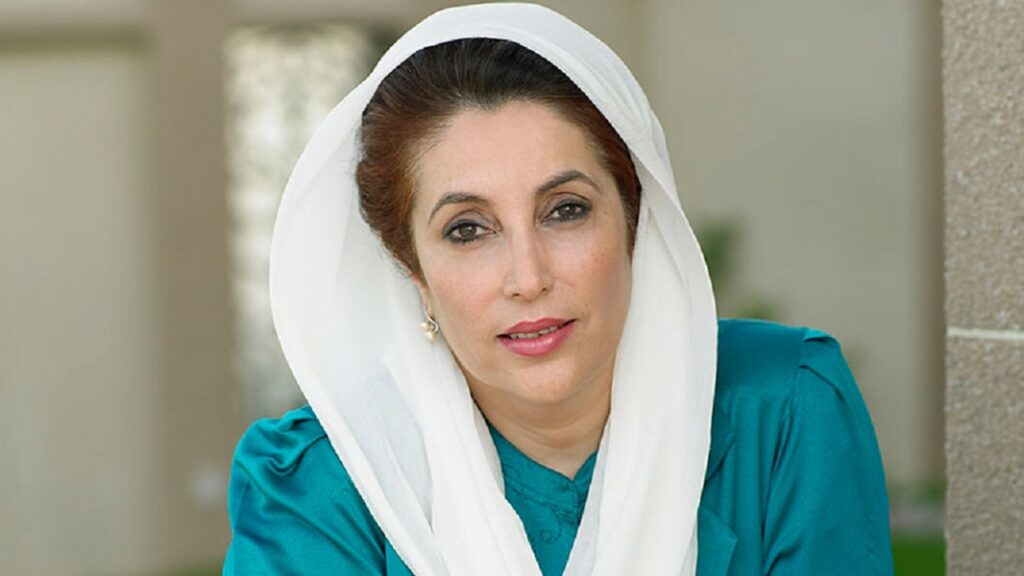
Shaheed Benazir Bhutto was one of the most influential political leaders in Pakistan’s history. She was not only the first female Prime Minister of Pakistan but also the first woman to lead a Muslim-majority country. Her life represents courage, sacrifice, democratic struggle, and public service. This comprehensive blog presents a complete overview of her birth, education, political journey, martyrdom, and her lasting educational legacy.
Birth and Family Background
Benazir Bhutto was born on 21 June 1953 in Karachi, Pakistan. She was the daughter of Zulfikar Ali Bhutto, former Prime Minister of Pakistan and founder of the Pakistan Peoples Party (PPP), and Begum Nusrat Bhutto, a respected political and social leader. Politics, democracy, and public service were deeply rooted in her family background.
(Reference: Britannica)
Early Education
Benazir Bhutto received her early education in Karachi from prestigious institutions, including:
- Lady Jennings Nursery School
- Convent of Jesus and Mary
- Karachi Grammar School
From a young age, she displayed confidence, leadership qualities, and political awareness.
(Reference: Biography Sources)
Higher Education and Intellectual Development
Harvard University
Benazir Bhutto studied at Radcliffe College, Harvard University, where she earned a Bachelor’s degree in Comparative Government in 1973.
University of Oxford
She later attended the University of Oxford, where she studied:
- Philosophy, Politics and Economics (PPE)
- International Law
Her education at world-class institutions shaped her democratic vision and global political understanding.
(Reference: Britannica)
Entry into Practical Politics
When Benazir Bhutto returned to Pakistan in 1977 after completing her studies, the country was under General Zia-ul-Haq’s martial law. Her father was arrested and later executed in 1979, which became a defining moment in her life.
She took over the leadership of the Pakistan Peoples Party (PPP) and began her struggle against dictatorship.
(Reference: History.com)
Imprisonment, Exile and Democratic Struggle
Due to her opposition to military rule, Benazir Bhutto faced:
- Imprisonment
- House arrest
- Long periods of exile
Despite these hardships, she remained steadfast in her commitment to democracy and civil rights.
(Reference: Britannica)
First Female Prime Minister of Pakistan
Following the death of General Zia-ul-Haq, elections were held in 1988, and Benazir Bhutto became Prime Minister. She made history as:
- Pakistan’s first female Prime Minister
- The first woman Prime Minister in the Muslim world
This achievement marked a historic milestone.
(Reference: History.com)
First Term in Office (1988–1990)
During her first term, she focused on:
- Restoring democracy
- Women’s rights
- Freedom of the press
- Health and education reforms
However, her government was dismissed due to political opposition.
(Reference: Britannica)
Second Term in Office (1993–1996)
Benazir Bhutto returned to power in 1993. Her second term faced challenges such as:
- Economic instability
- Foreign policy pressures
- Terrorism
- Energy crises
Her government was again dismissed in 1996.
(Reference: History.com)
Return to Pakistan in 2007
After years of exile, Benazir Bhutto returned to Pakistan in 2007 to contest upcoming elections.
On 18 October 2007, her convoy in Karachi was targeted in a suicide attack that killed hundreds, though she survived.
(Reference: History.com)
27 December 2007: Martyrdom
On 27 December 2007, after addressing a public rally at Liaquat Bagh, Rawalpindi, Benazir Bhutto was shot and targeted in a suicide attack while interacting with supporters. She sustained critical injuries and later embraced martyrdom.
This tragic event shook Pakistan and the entire world.
(Reference: History.com)
Political Speeches and Ideology
Benazir Bhutto’s speeches strongly emphasized:
- Democracy
- Civil and human rights
- Women’s empowerment
- Importance of education
- Opposition to extremism
Her speeches remain a source of political inspiration and democratic values.
(Reference: Britannica)
Benazir Bhutto’s Educational Legacy
Benazir Bhutto believed that education is the foundation of national progress. Today, several universities in Pakistan are named after her, reflecting her vision for education.
Notable Universities:
- Shaheed Benazir Bhutto University, Nawabshah
- Benazir Bhutto Shaheed University Lyari
- Shaheed Benazir Bhutto Women University, Peshawar
These institutions continue to promote higher education, research, and skills development.
(Reference: Wikipedia)
18th Death Anniversary and National Memory
The 18th death anniversary of Shaheed Benazir Bhutto reminds the nation that leaders may pass away, but their ideas and struggles live on.